
Our Services

Great services, great theme

DynaMD Offers Dynamic Solutions for Today's MD
Read More About Our Products and Services

In-Office Medication Dispensing

Dispensing your most commonly prescribed medications directly to patients has a number of benefits:

Physician and Practice Benefits:

  • Increased productivity and time savings: Reduced pharmacy phone calls and fax requests. Dispensing medications can actually save your staff time, helping your practice to focus more on patient care and their experience with your practice.
  • Reduced liability: The physician is the best advocate for the patient and has the complete facts. Directly dispensing your prescriptions ensures the patient gets the exact medication you prescribed.
  • Improved patient outcomes: Increasingly, physicians are being evaluating on patient outcomes. Directly dispensing your prescriptions can increase patient compliance.
  • All in one stop shop image: Give your patients the choices and options that they want, to fill their prescriptions where they choose to. Including at your practice.

Patient Benefits:

  • Convenience: Save a trip to the pharmacy. Pharmacy wait times can be hours. Patients value the time savings of filling prescriptions at their doctor’s office.
  • Cost: Regardless of the dispensing service you choose: Cash, Insurance Adjudication, or Workers Comp, this gives your patients very cost effective options.
  • Compliance: Various studies cite that ~20% to ~30% of prescriptions are never filled by patients.
  • Confidentiality: Our clients report a high utilization of their in-office dispensing option especially when the condition being treated might be sensitive to the patient. Patients appreciate the option to fill prescriptions in the privacy of their doctor’s office.

Topical Medications

Background

At least 116 million Americans, each year, report being affected by serious pain. Acute pain easily can evolve into chronic pain, which can become difficult to treat. Many commonly prescribed, commercially available pain relief medications help the symptoms associated with chronic conditions such as arthritis, fibromyalgia, migraine headaches, and other nerve and muscle pain, but they can also result in unwanted side effects such as drowsiness, dizziness or stomach irritation. Many patients taking these medications accept these conditions as part of daily life, but may find a better solution through pharmacy compounding

Benefits – The “Why”

  • “Misuse of oral prescription drugs is second only to marijuana as the nation’s most prevalent drug problem.” (Colliver, JD et al 2006)
  • Customized medication combinations to fit patient needs
  • Applied directly to site of pain
  • Improves patient compliance with fewer side effects

ADVANTAGES

Less Potential for Drug to Drug Interactions

  • Adverse drug reactions account for the 4th leading cause of death in the U.S.

Fewer Systemic Side-Effects

  • 10,000-20,000 deaths and > 70,000 hospitalizations a year caused by oral NSAIDs.
  • First pass metabolism and other variables associated with the gastrointestinal tract (like pH and gastric emptying time) are avoided.
  • Reduced side effects and the minimization of drug concentration peaks and troughs in the blood.

Multimodal Approach to Pain Management

  • Ability to combine several drugs into one topical compound allowing for multiple modes of action.

Concentration of Medication to Targeted Affected Area

  • Drug delivery in a focused manner and potentially up to 100 times greater concentration than through oral route.
  • Direct access to the target site.

Urine Drug Testing

Routine Drug Testing

Urine drug testing is a necessary part of chronic pain medication management and substance abuse rehabilitation clinics. It is critical to determine adherence to the patients current treatment plan. Many states require routine testing for prescribed narcotic pain medications, and some states even require random testing. This practice helps to keep the medications within levels that are safe for the patient.

Some patients take more medication than they should; sell medication they are not using, or use illicit drugs to supplement their treatment. Of course, these methods are undertaken without the authorization of the physician, and close drug monitoring can protect both the patient and the physician.

Regular and random urine drug testing is used to protect the patient from accidental overdose and drug interactions that the physician would not otherwise be aware of. Many patients have suffered overdoses from improper usage of prescription pain medication, and this procedure is used to prevent that unfortunate side effect. In addition, it allows the government and the physician to track the usage of prescription medication and ensure that either the patient does not abuse it or a third party that may obtain the medications. The practice is predicated on the compassionate desire of all pain management professionals to ensure the safe and effective use of narcotic pain medications.

Benefits of Testing

  • Confirm adherence or non-adherence to treatment plan
  • Detect early signs of medication and illicit drug misuse o Identify discrepancies with patient self-reported medication use
  • Enhance physician-patient dialogue
  • Raise the Standard of Care for your patient

Pharmacogenetic Testing

Everyone has unique, complex genetic characteristics. We typically think of these as things that determine our eye color or whether we are likely to develop certain diseases and disorders. However, genetics also affect how we respond to most commonly prescribed medications.

More than 75% of people have genetic variations that determine how their bodies process and use drugs. This applies not only to prescription medications, but also to over-the-counter medicines, herbal and dietary supplements, and recreational drugs such as marijuana.

Because of these genetic differences, two people can take the same dose of the same drug, but respond in very different ways. For example, the drug might work very well for one person, but not at all for another. Or the drug might cause side effects for one person, but not for someone else.

In some cases, drug-related side effects can be serious or cause death – even though the drug was prescribed correctly by the doctor and used correctly by the patient. People who take several different drugs face an even greater risk of dangerous side effects, especially if they are over 65 years of age.

Each year, millions of people are hospitalized because of dangerous side effects caused by drugs. In fact, serious drug-related effects are the 4th leading cause of death in the US.

Pharmacogenetic Testing is a non-invasive genetic test utilizing either a buccal or saliva specimen to identify how a patient’s genetic profile may impact his or her response to certain medications. Two patients, with the same diagnosis and prescribed the same medication and dose, may exhibit significantly different clinical responses.

The information from the test may help clinicians make more effective prescribing decisions that are personalized for each patient

Benefits of Pharmacogenetic Testing:

  • Improve the effectiveness of the medications you take;
  • Reduce negative side effects;
  • Prevent serious drug reactions; and
  • Avoid buying and using drugs that won’t work for you.

Injection Kits

Injections Overview

Injections for pain have been in the medical community for decades. Whether it is used in surgery or a physician’s private practice, these injections have earned their place in the medical field. The most popular purpose of the injections is to counteract pain. This is for acute (sudden onset), chronic (long term) pain, and pre/post – surgical procedures.

Common injections for pain:

1. Marcaine (Bupivacaine) – Used to “numb” pain

2. Lidocaine (Xylocaine) HCl (Hydrochloride) – Used to “numb” pain

3. Kenlog-40 (triamcinolone) – Used as an anti-inflammatory

4. Depo-Medrol – Used as an anti-inflammatory

5. Methylprednisolone – Used as an anti-Inflammatory

Physicians will give the injection or combination of injections based on patient history and/or exam. Injections can be used for a wide variety of conditions that a patient can develop such as; arthritic pain, joint pain, back pain, etc.

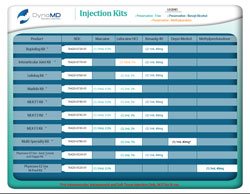
Convenience Injection Kits

In effort to minimize human error, reduce risk of contamination and create more efficiencies while in practice, Convenience Injection Kits came to market.

These kits come with everything, minus a needle and syringe, to create a “turn-key” solution for your medical providers.

Percutaneous Electrical Nerve Stimulation (PENS)

Biowave

Biowave’s neuromodulation pain therapy medical devices deliver a patented therapeutic electrical signal into deep tissue in the body which blocks the transmission of pain and improves function. Multiple clinical studies including double blinded randomized crossover studies have shown that a 20-30 minute treatment provides patients with significant benefits including:

  • Up to an immediate 75% average reduction in pain
  • 24 to 48 hours of pain relief
  • Increase in range of motion
  • Reduction of stiffness
  • Reduction of muscle spasm

Biowave’s advanced, patented signal mixing technology allowed for the design of a very easy to use device – there is no programming – the signals coming out of the device are optimized for passing through the skin into deep tissue and for inhibiting pain transmission.

Additionally, Biowave’s SmartPAD™ technology is used in every electrode made by the Company. SmartPAD™ electrodes allow for the continuous monitoring and adjustment of the electrical signal technology ensuring the accurate and safe delivery of therapeutic energy into deep tissue.

All of Biowave’s neuromodulation pain therapy systems treat joint or muscular related chronic, acute or post-surgical pain in the low back, shoulder, neck, hip, knee, elbow, legs, arms, wrist, hands, ankles and feet, without harmful side effects. Use of Biowave devices reduces the need for morphine, narcotics and other painkillers, resulting in better quality of life scores.

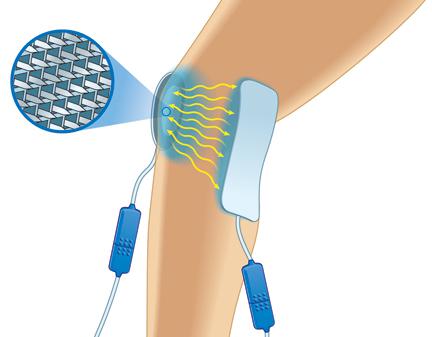
Biowave’s patented percutaneous electrode array (PEA) is a microneedle patch technology that facilitates the delivery of high frequency electrical feed signals through the skin directly into deep tissue encompassing the pain site. The PEA eliminates impedance and capacitance issues associated with skinPercutaneous Electrode Array

Patented Neuromodulation Signal Technology

The patented electrical signal technology is comprised of a premixed set of high frequency wave forms which are delivered to each electrode. As the feed signals pass through each electrode which are placed directly over points of pain, polarized structures including nerve fiber membranes, that lie within a two inch volume of tissue beneath each electrode, act like nonlinear devices, causing the feed signals to further multiply. The result is a new spectrum of signals including the formation of a low frequency electric field, which is believed to interrupt transmission of pain impulses by preventing action potential propagation along pain fibers – a similar mechanism to local chemical anesthesia, except without any deleterious side effects.

biowave pea

The use of different sized pads as well as the use of a percutaneous electrode in combination with a non-invasive electrode allow the resulting electric field to be focused in the volume of tissue surrounding and beneath the PEA (see top diagram to the right). The size of the volume of tissue affected can be changed and is dependent upon PEA placement, geometry and materials, as well as the intensity of the feed signals. The sensation felt by the patient is a comfortable pressure and tingling sensation without muscle twitching or side effects that are common to other electrotherapy devices.

Biowave also utilizes its patented SmartPAD™ technology in all of its electrodes. The SmartPAD™ technology is a continuous closed loop monitoring and adjustment of the delivery of the electrical signal technology. The SmartPAD™ technology ensures the accurate and safe delivery of therapeutic energy into deep tissue.